
Electric cars, imho, need rear wheel drive/all wheel drive. Preferably rear wheel drive – no torque steer (zero), usually better turning radius, and more traction. The ID3 goes like a horse stung by a bee in sport mode.
Rene, you really should drive the Kona before making guess, as you found, the ID3 has already been a much better car than you expected. The Kona now is fitted with decent tires, most videos are on horrible Nexans, now they fit Michelin tires, wheel spin is much reduced, but you can get it i’ll admit. The handling though for front wheel drive is really good, and the performance, well I’d happily watch you in the rear view mirror at the traffic lights if you were in the ID3. Both great cars, and both with things that could be improved, but the Kona is seriously hard to beat on the scheme as everything is standard. Looking forward to hearing your views on the Kona once you’ve actually driven it.
Here. A guy driving them back to back. Same road, same conditions.

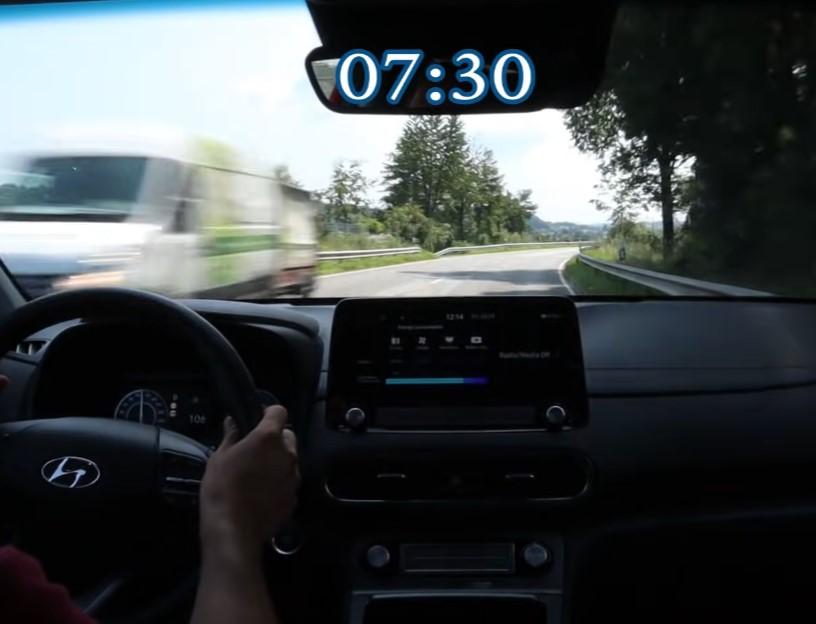
So, for starters, no. You’ll not see an ID3 in your rear view mirror. This was done in perfect conditions (good tarmac, sun shining), yet the Kona had to do it twice because the first time, it spun the wheels. So in perfect condition, you’ll see it right next to you. In any other situation, well.
Second, you’ll “admit” that you can get tyre slip? It’s rather obvious. We’re driving currently 235×19 Bridgestone Potenza, 150hp with DSG. I can’t put my foot down in the wet, dusty or gritty. I don’t need to drive a particular car to know that with considerably less contact patch (215×17) on the tyre, and considerably more power and even more torque, the tyres will slip. On top of that, my car has the “added benefit” of the engine weight sitting on top of the front axle, the Kona does not. In the Kona the “big weight” is in the centre. The reason the Kona has front wheel drive is simply because it’s not designed as an EV, it’s a petrol car converted to EV. Most, if not all EVs that are designed from the ground up are RWD or AWD. Enyaq, Ionic 5, EV6, Tesla, ID range etc pp. And the reason for that is simply that EVs don’t benefit from FWD like petrol cars do – there’s factually only downsides to FWD. Literally. Traction in snow? No benefit, because what makes FWD better in snow doesn’t apply to an EV (weight on the front axle – EVs have their weight in the centre). You get a larger turning radius, you get torque steer, you get less traction (or, maybe i should say “you’ll lose traction quicker due to torque”, probably more accurate), you get the same efficiency, and it’s not cheaper to put the motor and/or gearbox in the front like it is with ICE cars.
I understand that you like your car, and all the more power to you. We might like it too. That doesn’t change the fact that FWD sucks for EVs. Our biggest issue is the interior, which might be sorted after the test drive. We’re currently driving FWD (albeit 700-800kg lighter), so that wouldn’t be the biggest problem.
Prior: SEAT Ateca Xcellence Lux 1.5 TSI DSG MY19, VW Golf GTE PHEV DSG MY23
Current: Hyundai Ioniq 6 Ultimate
Next: we'll see what's available in 2028.