- This topic has 11 replies, 5 voices, and was last updated 5 years, 3 months ago by
 Wigwam.

- CreatorTopic
- January 19, 2021 at 9:04 am#136810
Unfortunately I have suffered a brain injury and occasionally I get confused and often say the wrong thing.
- CreatorTopic

- AuthorReplies
- January 19, 2021 at 9:56 am #136818
Not wanting to throw cold water on what might be a move forward for EVs, but Lithium-ion Phosphate batteries are not new. The article doesn’t say what the breakthrough is that’s claimed.
January 19, 2021 at 10:10 am #136823Not wanting to throw cold water on what might be a move forward for EVs, but Lithium-ion Phosphate batteries are not new. The article doesn’t say what the breakthrough is that’s claimed.
No problem Wigwam you will notice I have made no comment, it just information from the press.
Unfortunately I have suffered a brain injury and occasionally I get confused and often say the wrong thing.
January 19, 2021 at 10:10 am #136824Found this article from 15 months ago:
https://news.psu.edu/story/594641/2019/10/30/research/and-out-10-minute-electrical-vehicle-recharge
January 19, 2021 at 10:21 am #136828Interesting (but I imagine not unusual) that Mr Wang’s research team at Penn State are all Chinese. At least it saves the CCP having to spy on their work!
January 19, 2021 at 11:09 am #136839 Daf
DafA company called Storedot has produced a battery on a production line in China that can be recharged in 5 minutes.
Technology certainly moving forward. The article is in the Guardian.
January 19, 2021 at 11:16 am #136841A lot of investment money has gone into Storedot so industry must be hopeful. I can only imagine that to get so much energy into a battery in such a short time would need a fat connection direct to the National Grid !
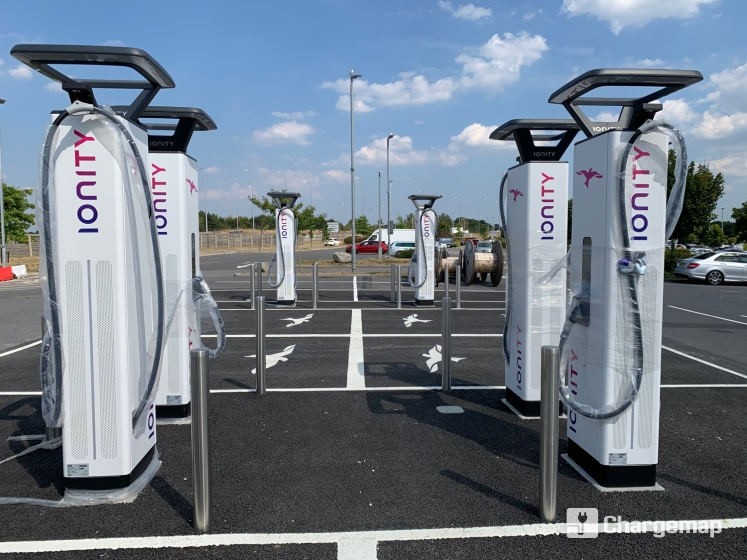
January 19, 2021 at 11:47 am #136846The best DC chargers that are already out there are the 350kW chargers that the Ionity network have installed, so you can work out the potential charge times, at 5.83kWh per minute (enough to drive 20-25 miles).
The fat connection to the National Grid is where companies such as GridServ come in with their grid connected batteries & solar arrays, but as of now they have only one, http://www.gridserve.com/braintree-overview/
As for the heating up & cooling down of batteries for optimum charge rates, some Teslas already do this, & some other manufacturers have cooling. Then there are people like me who annoyingly “yo-yo” (speed up rapidly then allow the car to slow down, before doing it again & again) to warm batteries just before getting to a rapid charger so my batteries will take the maximum charge rate possible. The Pug e-2008 can technically warm & cool the batteries properly but it’s just not been implemented properly in the software yet, hence the yo-yoing fun & games, and the Pug doesn’t show brake lights when you take the foot off the accelerator as it doesn’t quite slow fast enough to trigger the european regulated regeneration braking requirement. (If you do this then make sure you have a dashcam facing rearwards to record the inevitable BMW as it crashes into your rear end).
January 19, 2021 at 12:06 pm #136848T The fat connection to the National Grid is where companies such as GridServ come in with their grid connected batteries & solar arrays, but as of now they have only one, http://www.gridserve.com/braintree-overview/ .
Having just looked at the moving images on the website posted above, it struck me how disabled unfriendly it is, particularly for wheelchair users.
There are no chargers in the disabled bays.
Using a normal bay, a wheelchair user would have to park way outside of their marked box in order to get a wheelchair between the vehicle and the charger (to access the cables etc).
The chargers are on an island up on top of a kerb – again a problem for wheelchair users to reach the controls/payment slot etc.
Even if a wheelchair user could get onto the island, the roof supports are mounted in the centre of the islands (along with seats). Plus, the chargers are ‘back to back’ with only a small distance between them. It leaves virtually no room to get a wheelchair along the islands without having to do a slalom course, risking actually falling off the kerbs.
Perhaps they need to employ a few disabled people when planning their future designs!.
January 19, 2021 at 12:18 pm #136853Having just looked at the moving images on the website posted above, it struck me how disabled unfriendly it is, particularly for wheelchair users. There are no chargers in the disabled bays. Using a normal bay, a wheelchair user would have to park way outside of their marked box in order to get a wheelchair between the vehicle and the charger (to access the cables etc). The chargers are on an island up on top of a kerb – again a problem for wheelchair users to reach the controls/payment slot etc. Even if a wheelchair user could get onto the island, the roof supports are mounted in the centre of the islands (along with seats). Plus, the chargers are ‘back to back’ with only a small distance between them. It leaves virtually no room to get a wheelchair along the islands without having to do a slalom course, risking actually falling off the kerbs. Perhaps they need to employ a few disabled people when planning their future designs!.
They have indeed been shouted at, and as government grants have been used for the initial Braintree installation it’s a disgrace that planning permission was given for that layout. Brown envelopes to council members methinks.
Now look at how it could be done…. this time by Ionity at Cobham Services
 January 19, 2021 at 1:16 pm #136867
I’ve lost count (and subsequently interest and belief) in the number of “imminent breakthroughs” regarding battery and charging tech. I’m not saying it won’t eventually happen but don’t hold your breath! I’ll gladly keep an eye on the real-time progress and actual production and deployment of latest tech though because, ultimately, what’s actually available at purchase time is ya lot!
January 19, 2021 at 1:40 pm #136870Putting the chargers on an island protected by raised kerbs is a good example of lack of lateral thinking. Petrol pumps are on raised islands to prevent them being hit by a car which would have catastrophic consequences if petrol pipework inside the pump was ruptured and fire ensued. It looks like charging site designers have just followed the same thinking. Refreshingly the Cobham site uses posts to achieve the same aim because the risk to the public is very much lower. Let’s hope everyone follows their example.
- AuthorReplies



- You must be logged in to reply to this topic.